
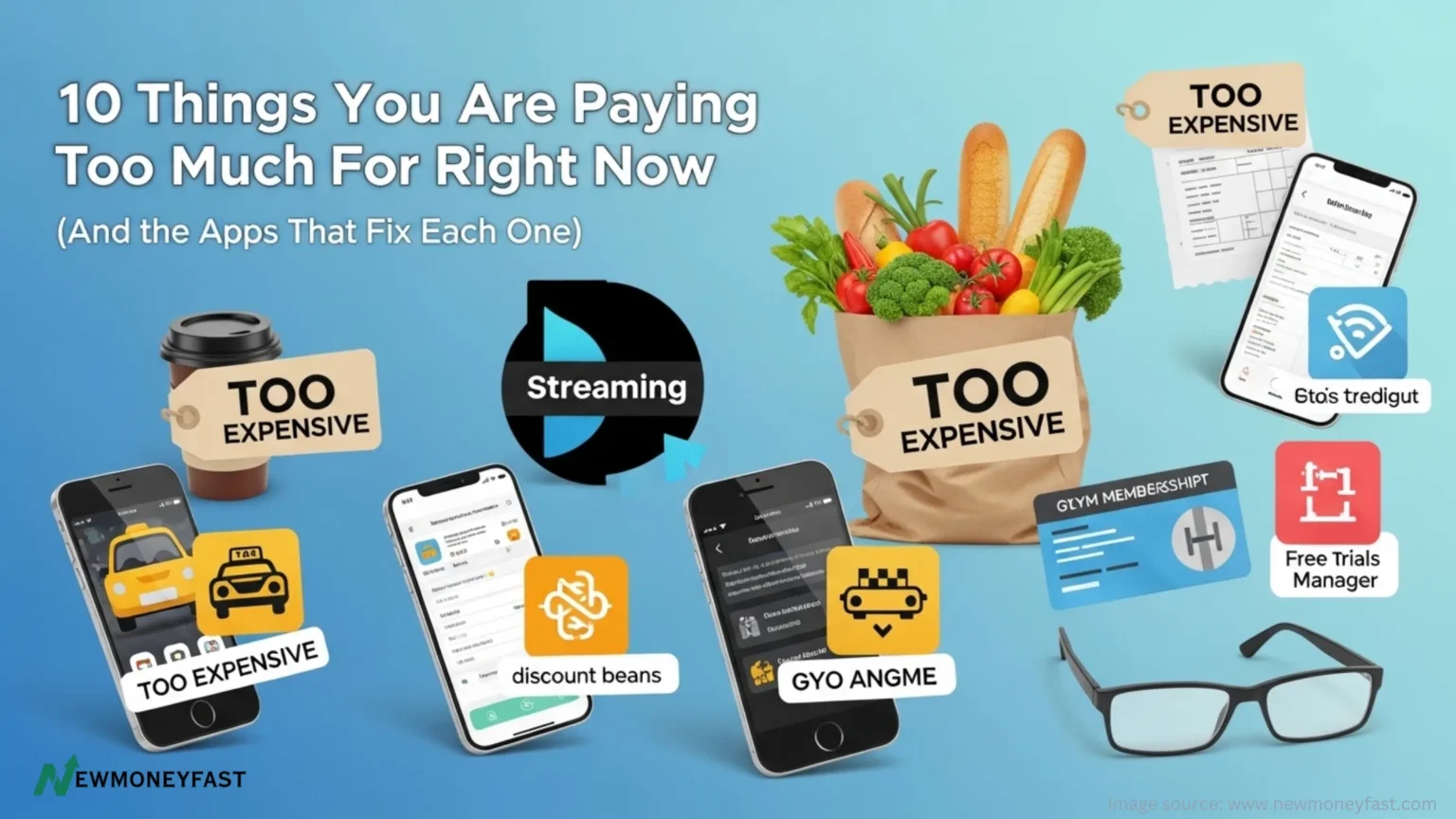
| The average American now spends nearly $280 a month on internet, mobile, cable TV, and streaming alone. Add in bloated insurance premiums, forgotten subscriptions, and bank fees, and you are probably leaving $300 or more on the table every single month. Here are the 10 biggest money leaks in your budget and the exact apps and strategies that fix each one today. |
Prices have been creeping up across every category of household spending. The sneaky part? Most of these overcharges are invisible. Nobody sends you a letter saying “hey, you just paid $30 more than you needed to for car insurance.” The overcharges just silently drain your bank account month after month. This list shines a light on the 10 biggest culprits and shows you exactly how to fight back.
| Quick Wins SummaryTotal Potential Savings: $200-$500+ per monthTime Investment: 30-60 minutes to audit and set upDifficulty Level: Beginner-friendlyBest For: Anyone who pays bills, has subscriptions, or shops online |
1. Streaming Services (You Are Subscribed to Too Many)
The average American household now spends $51.71 a month on streaming services alone, according to a 2025 Reviews.org State of Consumer Media Spending report. That is over $620 a year. And here is the kicker: 32% of subscribers are paying for services they rarely use.
Streaming platforms have been hiking prices aggressively. Netflix, Disney+, Hulu, and HBO Max have all raised rates in recent years, and subscribing to all major premium tiers now costs around $140 a month.
The Fix
- Action: Use Rocket Money to automatically identify all your active subscriptions and cancel the ones you forgot about. Most users find at least one or two services they no longer actively watch.
- Savings: Cutting two unused streaming services saves the average person $25-$45 a month.
2. Car Insurance (Shopping Around Can Save $500+ a Year)
The national average cost of car insurance is now $1,993 per year, or about $166 a month, according to a 2025 Federal Reserve study cited by Ramsey Solutions. The problem is most drivers set up a policy and never shop it again. Insurers count on that loyalty.
One driver in Washington switched providers and dropped her bill from $500 a month to $190, saving over $3,700 a year, as reported by NPR. Rates vary wildly between insurers for identical coverage.
The Fix
- Action: Use The Zebra or Policygenius to compare car insurance quotes side by side in under 5 minutes. No agent calls required.
- Savings: Shopping around can save $200-$700 a year depending on your state and driving record.
3. Your Mobile Phone Plan (MVNOs Charge Half the Price)
A standard plan from AT&T, Verizon, or T-Mobile averages $58 per month in 2025. But switching to a Mobile Virtual Network Operator (MVNO) that runs on the same towers drops your average bill to $44 a month, saving $199 a year, per Reviews.org.


MVNOs like Mint Mobile, Visible, and Cricket use the exact same network infrastructure as the Big Three carriers. You get identical coverage for significantly less.
The Fix
- Action: Compare plans on WhistleOut. Mint Mobile’s 4-line family plan can slash your bill by 50% with no contract.
- Savings: $15-$50 per month, per line. Families with four lines can save $600-$2,400 a year.
4. Cable TV (You Are Paying for Channels Nobody Watches)
The average monthly cable or satellite TV bundle cost $187.99 as of early 2025, according to JD Power. That is over $2,250 a year for hundreds of channels that most households scroll past without watching.
Live TV streaming alternatives like YouTube TV and Hulu + Live TV offer comparable channel lineups for $75-$95 a month, cutting your bill by nearly 50%.
The Fix
- Action: Call your provider and ask for a retention offer. Mentioning you are considering canceling often unlocks discounts of $20-$50 a month on the spot. If they say no, switch to YouTube TV.
- Savings: $50-$100 per month by negotiating or switching to a streaming alternative.
5. Bank Fees (The Invisible Tax on Your Money)
Monthly maintenance fees, overdraft charges, and out-of-network ATM fees add up to hundreds of dollars a year for millions of Americans. The frustrating part: most of these fees are completely avoidable.
Online-only banks and neobanks like Chime charge zero monthly fees, zero overdraft fees on qualifying deposits, and zero out-of-network ATM fees at 60,000+ locations. Traditional banks routinely charge $12-$35 per month just for having an account.
The Fix
- Action: Open a free checking account with Chime or Ally Bank. Keep your old account until you have set up all direct deposits and auto-payments to avoid any disruption.
- Savings: $100-$400 a year in eliminated fees.
6. Groceries Without Cashback (Free Money Left at the Register)
If you are not using cashback apps at the grocery store, you are handing back free money. Apps like Ibotta, Fetch Rewards, and Checkout 51 let you earn real cash back on items you already buy, from cereal and produce to cleaning supplies and toiletries.
Checkout 51, for example, focuses on cash back for groceries and gas. You browse available offers, buy the matching items, snap a photo of your receipt, and the cash lands in your account. New offers reload weekly.
The Fix
- Action: Stack Ibotta with Fetch. Scan your receipt in both apps after every grocery trip. Takes 90 seconds.
- Savings: $20-$50 a month in stacked grocery cashback.
7. Online Shopping Without Coupons (Browser Extensions Do the Work for You)
Every time you check out online without a coupon extension installed, you are probably overpaying. Honey by PayPal and Rakuten automatically apply coupon codes and surface cashback offers the second you land on a checkout page. Rakuten even alerts you when a competing retailer is selling the exact same item for less.
Rakuten is best for major retailer online shopping. Honey is great for smaller sites and automatically tests dozens of codes before you check out, showing you the best available discount.
The Fix
- Action: Install both browser extensions now. They run silently in the background and activate automatically. Zero effort required after setup.
- Savings: $10-$60 per shopping session depending on available deals.
8. Home Internet (Loyalty Pricing Is Working Against You)
The typical American household pays over $800 a year for home internet, with the average unbundled wired plan running $83.35 per month in early 2025, per JD Power. The catch is that introductory pricing expires quietly, and your bill silently creeps up. Staying loyal to an ISP almost always costs you more.
Fiber providers and wireless home internet options like T-Mobile Home Internet often offer flat-rate pricing with no annual contracts and no hidden fees, frequently undercutting cable ISPs by $20-$40 a month.
The Fix
- Action: Call your ISP and ask for a loyalty discount or match a competitor’s pricing. Use BroadbandNow to compare every provider available at your address.
- Savings: $15-$40 per month by negotiating or switching providers.
9. Forgotten or Unused Subscriptions (The $1,000+ Leak)
Americans are now spending well over $1,000 a year on subscription services, according to multiple 2025 reports. The problem is that most people dramatically underestimate how many they have. Gym memberships, app subscriptions, box deliveries, and software trials that converted to paid plans, all quietly charging your card monthly.
Apps like Rocket Money scan your bank and credit card statements, surface every subscription you are paying for, and let you cancel the unwanted ones directly inside the app. US News highlighted Rocket Money for its ability to automatically categorize expenses and alert you before you overspend.
The Fix
- Action: Run a subscription audit with Rocket Money this week. The free plan surfaces all your subscriptions. The premium plan ($6-$12/month) can negotiate bills on your behalf too.
- Savings: Most users uncover $50-$200 a month in subscriptions they had forgotten about.
10. Gas (GasBuddy Finds Cheaper Pumps Near You in Seconds)
Gas prices vary by as much as $0.30-$0.50 per gallon within just a few miles of each other. If you are filling up at the first station you pass, you are almost certainly overpaying. GasBuddy crowdsources real-time gas prices from millions of drivers and shows you the cheapest stations nearby before you even leave the house.
GasBuddy also offers a “Pay with GasBuddy” card that earns GasBack rewards when you shop at partner stores, automatically applied at the pump. No credit card required.
The Fix
- Action: Download GasBuddy and check prices before your next fill-up. Combine it with loyalty rewards programs at grocery store fuel centers for maximum savings.
- Savings: $15-$40 a month for drivers who fill up frequently.
Your Savings Breakdown at a Glance
| Overpay Category | Potential Monthly Savings |
| Streaming Services | $25-$45 |
| Car Insurance | $25-$60 |
| Mobile Phone Plan | $15-$50 |
| Cable TV | $50-$100 |
| Bank Fees | $10-$35 |
| Grocery Cashback | $20-$50 |
| Online Shopping | $10-$60 |
| Home Internet | $15-$40 |
| Forgotten Subscriptions | $50-$200 |
| Gas | $15-$40 |
| TOTAL POTENTIAL SAVINGS | $235-$680 |
| The 7-Day Bill Audit ChallengePick one category from this list each day for the next 7 days. Day 1: cancel one streaming service you barely use. Day 2: get an insurance quote. Day 3: check your ISP bill and call for a discount. By Day 7 you will have taken meaningful action on at least seven of these leaks. Track your savings and report back. Beginner target: $100 saved in 7 days.Which overpay category surprises you most? Share this article with someone who needs to see it. |
Visual Content Suggestions for Design Team
- INFOGRAPHIC: A leaking wallet graphic labeled with all 10 overpay categories and the dollar amount draining out of each one monthly.
- COMPARISON CHART: Side-by-side comparison of Big Three mobile carriers vs. MVNO monthly costs (AT&T/Verizon/T-Mobile vs. Mint/Visible/Cricket).
- BEFORE/AFTER GRAPHIC: Monthly budget showing a household’s bills before and after implementing all 10 fixes, with a bold total savings callout.
- APP ICON GRID: Grid of logos for all recommended apps (Rocket Money, Ibotta, Fetch, GasBuddy, Rakuten, Honey, Chime) with a short one-line description beneath each.
Frequently Asked Questions
Is it safe to connect my bank account to these apps?
Reputable apps like Rocket Money, Empower, and Ibotta use bank-level 256-bit encryption and read-only account access, which means they can view your transactions but cannot move or access your money. Always check that the app partners with an FDIC-insured institution before connecting. According to Bankrate, the best money-saving apps implement multiple layers of protection to keep your personal information safe.
How quickly will I see savings?
Some savings are instant. Installing a browser coupon extension costs nothing and activates the moment you check out online. Canceling unused subscriptions saves you money starting from your next billing cycle. Shopping for new car insurance or a phone plan can produce savings within a week of switching.
Do I need to switch all my services at once?
No. Start with the category that will save you the most, which is usually car insurance or subscriptions, then work your way through the list one item per week. Small, consistent changes add up fast without feeling overwhelming.
What if I am locked into a contract?
Check your contract’s early termination fee against your projected annual savings. For car insurance, you can usually switch mid-policy and receive a prorated refund. For internet and phone plans, many providers now offer month-to-month options that make switching much easier.
Can I really save hundreds of dollars a month just with apps?
Yes, and the math backs it up. Stacking grocery cashback apps, eliminating one or two unused subscriptions, switching phone carriers, and negotiating your cable bill alone can easily add up to $150-$300 a month in recovered spending. The key is doing all of these things at once rather than picking one.
| Stop Leaving Money on the TableYou now have the exact playbook to start recovering $200, $300, even $500 a month from your biggest budget leaks. Pick your first app from this list, set it up today, and start stacking wins. Your future self will thank you.Follow New Money Fast for your next quick win. |
Sources
- Reviews.org – State of Consumer Media Spending 2025
- Ramsey Solutions – How Much Does Each Person Spend on Insurance
- JD Power – Average TV and Wired Internet Bills Q1 2025
- US News – Automatic Money-Saving Apps
- Bankrate – 9 Best Money-Saving Apps of 2025
- Ramsey Solutions – Best Cash-Back and Coupon Apps
- NPR – Why Car Insurance Costs Have Soared
- Boardroom – Streaming vs. Cable Economics 2025.