

The average person wastes $273 every month on subscriptions and purchases they never actually track, according to The Jolt Journal’s 2025 budgeting research. That is $3,276 a year leaking out of your account in near-silence. A budgeting app can stop that. But do you need to pay for one to see real results?
Short answer: it depends entirely on your money personality. Let’s break down exactly which type of app wins for which type of person, so you stop guessing and start saving.
| Quick SnapshotFree apps: Best for beginners who want to track spending with zero commitmentPaid apps: Best for people serious about changing their financial habits long-termVerdict: The best app is the one you will actually open. Start free, upgrade when you are ready. |
What Free Budgeting Apps Get Right
Free apps have come a long way. They are no longer just glorified spreadsheets. Today’s best free options give you real tools at zero cost, and for most beginners, that is all you need to start winning.
Rocket Money (Free Tier)
Rocket Money’s free version connects your bank accounts, tracks spending by category, sends balance alerts, and surfaces your subscriptions automatically. For someone who has never looked at their spending patterns before, this alone can be eye-opening. The Penny Hoarder’s 2026 app review calls Rocket Money’s free tier one of the strongest entry-level options because it gives you actionable info without asking for a credit card first.
Best for: Anyone starting from zero who wants instant spending clarity.
Goodbudget (Free Tier)



Goodbudget uses the classic envelope budgeting system digitally. You divide your income into virtual spending envelopes for groceries, rent, fun, and everything else. The free version gives you 10 envelopes and one year of transaction history, which is enough to build real habits. It does not link to your bank automatically, which some people actually prefer because it forces you to stay aware of every dollar, per NerdWallet’s best budget apps guide.
Best for: People who want structure without handing over bank access.
NerdWallet App (Free)
Completely free with no paid tier, the NerdWallet app links your accounts, shows spending by category, tracks your credit score, and flags upcoming bills. It is not the deepest budgeting tool, but it is an excellent dashboard for people who want a birds-eye view of their finances at no cost, as highlighted in Engadget’s 2026 budgeting app roundup.
Best for: Casual trackers who also want free credit score monitoring.
Where Free Apps Hit Their Limit
Free apps are great starters. But they tend to share three common limitations:
- Limited customization: You often get a fixed number of budget categories and cannot build a system around your specific lifestyle.
- Basic reporting: Trend analysis, year-over-year comparisons, and detailed spending forecasts are typically locked behind paid tiers.
- No behavior coaching: The best paid apps do not just track your money. They actively change how you think about it.
That third point is where paid apps pull ahead. Because awareness alone does not always change behavior. Sometimes you need a system that forces you to plan ahead, not just look back.
What Paid Apps Actually Deliver
YNAB (You Need a Budget)—$14.99/month or $109/year
YNAB is the gold standard for people who are serious about financial transformation. It runs on zero-based budgeting, meaning every dollar you earn gets assigned a job before you spend it. Groceries, rent, savings, and even your “fun money” envelope get funded in advance.
The results are hard to argue with. YNAB’s own data, confirmed by independent reviews, shows that average new users save $600 in their first two months and more than $6,000 in their first year. Meanwhile, 92 percent of users report feeling less stressed about money after starting, according to Grokipedia’s YNAB analysis.
Trade-off: There is a genuine learning curve. YNAB requires active, ongoing effort. It rewards the disciplined user. College students get a free year, which is one of the best deals in personal finance right now.
Best for: Detail-oriented budgeters ready to change their relationship with money.
Rocket Money Premium—$6-$12/month
The premium tier of Rocket Money unlocks bill negotiation, subscription cancellation assistance, unlimited budget categories, and premium spending reports. If you have recurring bills you suspect are too high and hate sitting on hold with customer service, this upgrade often pays for itself in a single negotiated bill, per The Motley Fool’s Rocket Money vs YNAB comparison.
Best for: People who want automation and low-maintenance money management.
Monarch Money—$8.33/month (billed annually)
Monarch Money is the best replacement for Mint, which shut down in 2024. It offers detailed reports, shared household budgeting, net worth tracking, and investment monitoring. FinanceBuzz’s 2026 budgeting app analysis notes it holds a 4.7-star rating on Google Play and 4.9 stars on the App Store, with positive reviews, especially from couples managing finances together.
Best for: Couples, families, and former Mint users who want comprehensive financial oversight.
Side-by-Side: Free vs. Paid App Breakdown
| App | Cost | Best For | Standout Feature |
| Rocket Money | Free / $6-$12/mo | Beginner | Subscription audit, bill negotiation, spend tracking |
| YNAB | $14.99/mo or $109/yr | Intermediate | Zero-based budgeting, goal tracking, debt payoff tools |
| Goodbudget | Free / $10/mo | Beginner | Envelope budgeting, manual entry, family sharing |
| Monarch Money | $8.33/mo (annual) | Intermediate | Couples budgeting, net worth, investment tracking |
| PocketGuard | Free / $12.99/mo | Beginner | Safe-to-spend meter, bill tracking, subscription finder |
| EveryDollar | Free / $17.99/mo | Beginner | Zero-based budgeting, Ramsey method, debt snowball |
| NerdWallet App | Free | Beginner | Credit score, spending overview, account linking |
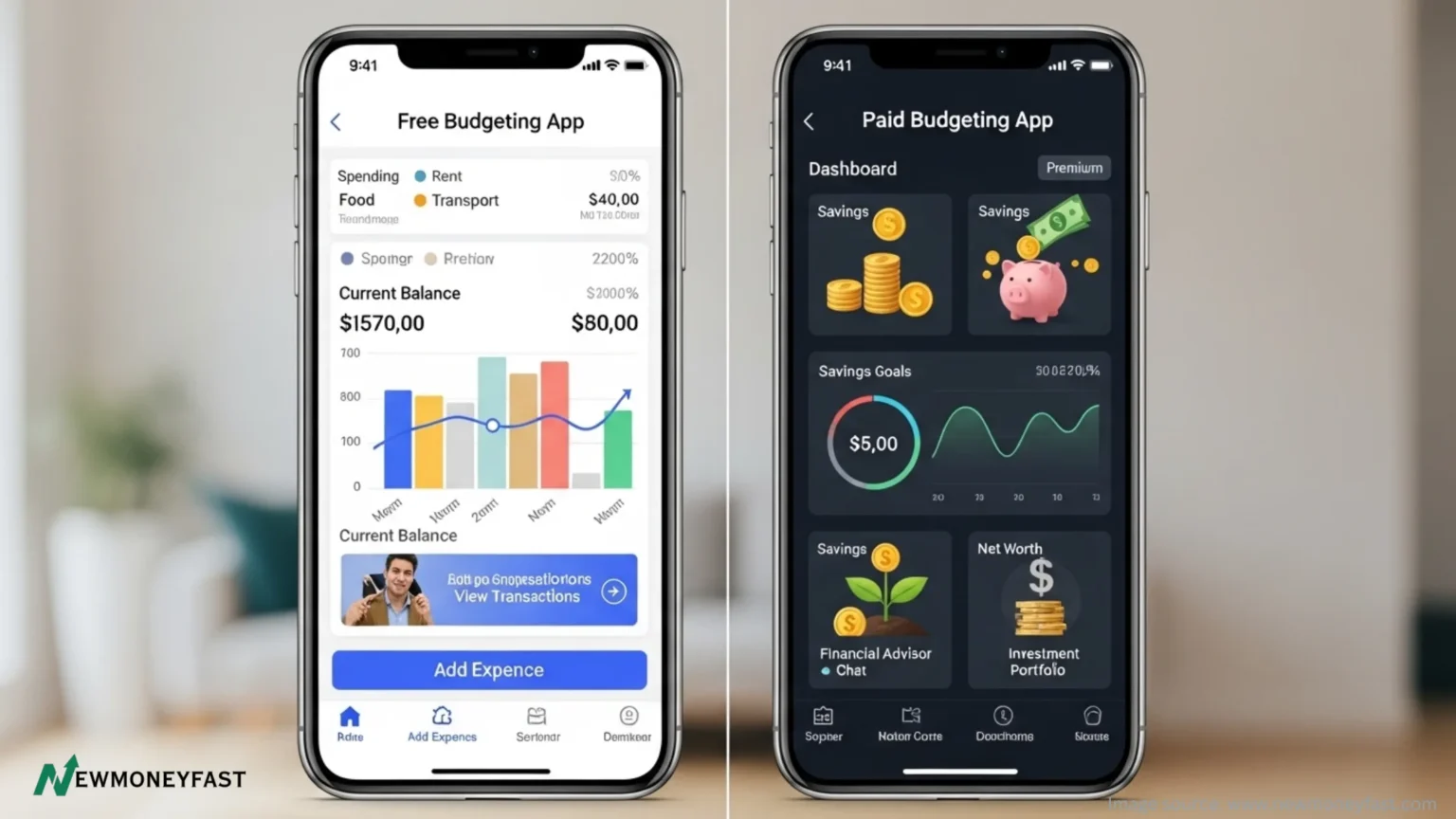
| Visual Content Suggestions for Design TeamDecision flowchart: “Which budgeting app is right for you?” starting with questions like ‘Do you have irregular income?’ and ‘Are you budgeting with a partner?’Bar chart: Average first-year savings comparing free app users ($3,000-$4,000) vs YNAB users ($6,000+)Phone mockup duo: Free app dashboard (Rocket Money) vs paid app dashboard (YNAB) side-by-sidePersonality quiz graphic: ‘Free or Paid? Find Your Match’ with four money personality types mapped to recommended apps |
| The Real Question to Ask YourselfBefore choosing free or paid, ask: Will I actually use this? A $15/month YNAB subscription that you open daily is worth more than a free app you forget about by Wednesday. Start with the free version of any app. If you find yourself wanting more control, more detail, or stronger results, that is your sign to upgrade. |
Which Type of Budgeter Are You?
You are a Free App person if…
- You have never tracked your spending before and want to start without pressure
- You just want to see where your money goes each month
- You are paying off debt and cannot spare an extra $10-$15 monthly right now
- You want zero commitment while you figure out what budgeting style works for you
You are a Paid App person if…
- You have tried free apps but keep falling off the wagon after a few weeks
- You know you overspend but tracking alone has not changed your behavior
- You want to pay off debt faster, build savings goals, or get out of the paycheck-to-paycheck cycle
- You are managing finances with a partner or family and need shared visibility
| Pro Tip: Stack the Free Trial Before You CommitYNAB offers a 34-day free trial. Rocket Money has a 7-day premium trial. Monarch Money offers a 7-day trial. Run them back to back and see which one you actually open every morning. That app wins. Do not pay a dime until you are hooked. |
Frequently Asked Questions
Are free budgeting apps actually good enough?
Yes, for many people they absolutely are. Free apps like Rocket Money’s base tier and Goodbudget give you genuine insight into your spending patterns. The Jolt Journal’s research found that even free app users save an average of $3,000-$4,000 in their first year through improved awareness and catching forgotten subscriptions.
Is YNAB worth the price?
For serious budgeters, yes. If YNAB users save an average of $6,000 in their first year, the $109 annual cost delivers an extraordinary return. The caveat is that YNAB requires consistent effort. It does not work passively. Ramsey Solutions’ budgeting app comparison notes that users who commit to the zero-based system consistently see the best results.
What replaced Mint?
Mint officially shut down in early 2024. The most popular replacements are Monarch Money (best for Mint-like experience with more depth), Rocket Money (best for simplicity and subscription management), and YNAB (best for users who want stronger budgeting discipline). Credit Karma, which Intuit promoted as a replacement, lacks budgeting features, per FinanceBuzz’s 2025 analysis.
Can I use more than one budgeting app?
Technically yes, but it usually creates confusion. Pick one app as your primary budgeting tool. You can supplement with a separate app for a specific purpose, like using GasBuddy for gas savings alongside YNAB for budgeting. But for core budget tracking, one app done consistently beats three apps done sporadically every time.
How long before I see results?
Most people discover $200-$400 in recoverable spending within the first week just by seeing where their money actually goes. Meaningful behavior change, where your habits shift and savings grow consistently, typically takes 60 to 90 days of regular use. Give any app at least two full billing cycles before judging it.
| Challenge: The 30-Day App TestPick any app from this list. Use it every day for 30 days. At the end of the month, add up what you saved or redirected versus your usual spending. Share your result. Readers who try the challenge regularly report finding $150-$400 in their first month alone.Which app will you start with? The free version of Rocket Money is a zero-risk place to begin today. |
| Stop Guessing. Start Budgeting.Free or paid, the best budgeting app is the one that gets you to open it. Start with Rocket Money’s free tier this week, get a clear picture of your spending, and decide from there whether you want to upgrade to YNAB or Monarch for next-level results.The only wrong move is doing nothing. Your money is waiting. |
Sources
- The Jolt Journal: Best Budgeting Apps 2025
- NerdWallet: Best Budget Apps 2026
- FinanceBuzz: Best Budgeting Apps 2026
- Engadget: Best Budgeting Apps 2026
- YNAB Official Pricing Page
- Grokipedia: YNAB Analysis
- The Motley Fool: Rocket Money vs YNAB (2025)
- Ramsey Solutions: Budgeting Apps Comparison
- The Penny Hoarder: Best Budgeting Apps 2026
- FinanceBuzz: Rocket Money vs Mint (2025)