

Freedom Debt Relief helps struggling borrowers negotiate with creditors to settle debts for less than owed; clients save an average of 28% on enrolled debt after fees, though results vary significantly.
The Debt Crisis Affecting Millions
Over 65% of Americans live paycheck to paycheck, and more than 80% carry some form of debt. When unexpected expenses hit, many turn to credit cards or loans they can’t realistically repay, creating a cycle of mounting interest and late fees that feels impossible to escape.
Freedom Debt Relief specializes in breaking that cycle through debt settlement, where they negotiate with creditors on your behalf to reduce what you owe.
How Freedom Debt Relief Works
The process follows five clear steps:
1. Free Assessment – A debt consultant evaluates your financial situation at no cost to determine if you qualify.
2. Monthly Deposits – You stop paying creditors directly and instead deposit money into an FDIC-insured account you control.
3. Negotiation – As funds accumulate, Freedom’s team negotiates with creditors to accept less than the full balance.
4. Settlement – Once a creditor agrees, you pay from your dedicated account. Freedom collects its fee only after successful settlement.


5. Completion – After all enrolled debts are settled, you graduate from the program debt-free.
Over 70% of customers receive their first settlement within three months, though complete programs typically take 24-48 months.
What It Costs
Freedom Debt Relief charges 15-25% of your total enrolled debt as a settlement fee, varying by state. There’s also a $9.95 setup fee and a $9.95 monthly maintenance fee.
Example: If you enroll with $15,000 in debt and settle for $8,000, you’d pay:
- $8,000 to creditors
- $3,750 settlement fee (25% of $15,000)
- Total: $11,750 vs. $15,000 original debt
That’s $3,250 in savings, minus setup and monthly fees.
Who Qualifies
You need at least $7,500 in unsecured debt from:
- Credit cards (including store cards)
- Medical bills
- Personal loans
- Collections accounts
- Private student loans
Freedom doesn’t settle secured debts like mortgages or auto loans, federal student loans, tax debt, or utility bills.
Pros and Cons
Benefits
✓ No upfront fees – Pay only after successful settlement
✓ Proven track record – Over 1 million clients served, $20+ billion settled
✓ Professional negotiators – Creditors take them seriously
✓ 24/7 dashboard – Track progress anytime
✓ Fee refund guarantee – If total costs exceed enrolled debt, Freedom refunds the difference
Drawbacks
✗ Credit score damage – Stopping payments tanks your score for up to 7 years.
✗ No guarantees – Not all creditors accept settlements.
✗ Tax implications – Forgiven debt over $600 may count as taxable income.
✗ Continued fees – Late fees and interest accumulate during negotiation.
✗ Lawsuit risk – Creditors may sue during the process.
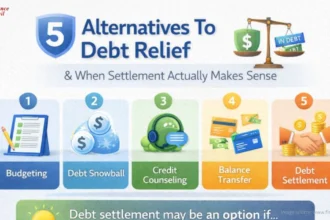
Top Alternatives to Consider
| Option | Best For | Impact on Credit | Timeline |
| Freedom Debt Relief | $7,500+ unsecured debt | Severe negative | 2-4 years |
| DIY Settlement | Few creditors, good negotiation skills | Severe negative | Varies |
| Debt Management Plan | Steady income, willing to pay in full | Positive over time | 3-5 years |
| Debt Consolidation Loan | Good-fair credit, multiple debts | Minimal impact | 2-7 years |
| Bankruptcy (Chapter 7) | Overwhelming debt, no repayment ability | Severe negative | 4-6 months |
Frequently Asked Questions
Is Freedom Debt Relief legitimate?
Yes. Founded in 2002, it holds an A+ BBB rating and accreditation from the American Association for Debt Resolution. However, legitimacy doesn’t guarantee success—not all creditors will negotiate.
How much can I actually save?
The average client saves 28% of enrolled debt after fees. Individual results vary widely based on creditors, debt amount, and negotiation outcomes.
Will this ruin my credit?
Yes, significantly. Stopping payments causes accounts to go delinquent, dropping your score by 100+ points. Settled accounts remain on your report for seven years marked as “settled” rather than “paid in full.”
What if my creditors won’t negotiate?
There’s no guarantee of success. Some creditors refuse to work with settlement companies. You’d have wasted months of non-payment and accumulated fees with no resolution.
Are there cheaper options?
Nonprofit credit counseling agencies offer debt management plans with lower fees (typically 0-8% vs. 15-25%). You can also negotiate directly with creditors yourself to avoid settlement fees entirely.
Do I owe taxes on forgiven debt?
The IRS typically treats forgiven debt over $600 as taxable income unless you’re insolvent (liabilities exceed assets) when the debt is settled.
The Bottom Line
Freedom Debt Relief works best for people with $7,500+ in unsecured debt who cannot afford minimum payments and want to avoid bankruptcy. The average 28% savings can provide real relief, but the credit damage, fees, and lack of guarantees make this a risky option.
Before enrolling, consider:
- Can you negotiate directly with creditors yourself?
- Would a nonprofit debt management plan work better?
- Does a debt consolidation loan make sense?
- Is bankruptcy actually the right solution?
Debt settlement should be a last resort before bankruptcy, not a first step.
Ready to explore your options? Get a free debt evaluation from Freedom Debt Relief or compare alternatives through a nonprofit credit counselor. The consultation costs nothing and helps you make an informed decision about your financial future.
This article is for informational purposes only and does not constitute financial advice. Consult with a certified financial advisor or attorney before making debt relief decisions.
In another related article, Debt Settlement vs. Debt Consolidation: Which Is Better for You?