
Debt relief programs can reduce what you owe by 30-60%, but they come with serious trade-offs, including credit damage and high fees. Here’s how to decide if they’re right for you.
The Reality of Debt Relief Programs
If you’re drowning in credit card debt, debt relief programs promise an appealing solution: pay less than you owe and get a fresh start. But these programs aren’t the magic fix they appear to be. Understanding both the benefits and risks is essential before you commit.
How Debt Relief Programs Actually Work
Debt relief encompasses several strategies, each with different approaches and outcomes:
Debt Settlement involves negotiating with creditors to accept less than the full amount owed, typically 30-60% of your original debt. A $100,000 debt could potentially shrink to $30,000-60,000.
Debt Management Plans (DMPs) consolidate multiple payments into one monthly payment through a nonprofit credit counseling agency, often with reduced interest rates.
Debt Consolidation combines multiple debts into a single loan or balance transfer credit card, ideally at a lower interest rate.
Bankruptcy is the legal last resort that can discharge certain debts entirely but carries the most severe long-term consequences.
The Real Costs: What You’ll Pay
Understanding the fee structure is critical:

- Debt settlement companies: 15-25% of the total enrolled debt (not just the settled amount)
- Credit counseling/DMP setup fees: $0-75, plus monthly fees of $0-50
- Balance transfer fees: 3-5% of the transferred amount
- Bankruptcy filing: $1,300-1,800 in court costs, plus attorney fees
For example, if you settle $50,000 in debt for $25,000, you’ll pay the creditors $25,000 plus $7,500-12,500 to the settlement company.
The Benefits: Why People Choose Debt Relief
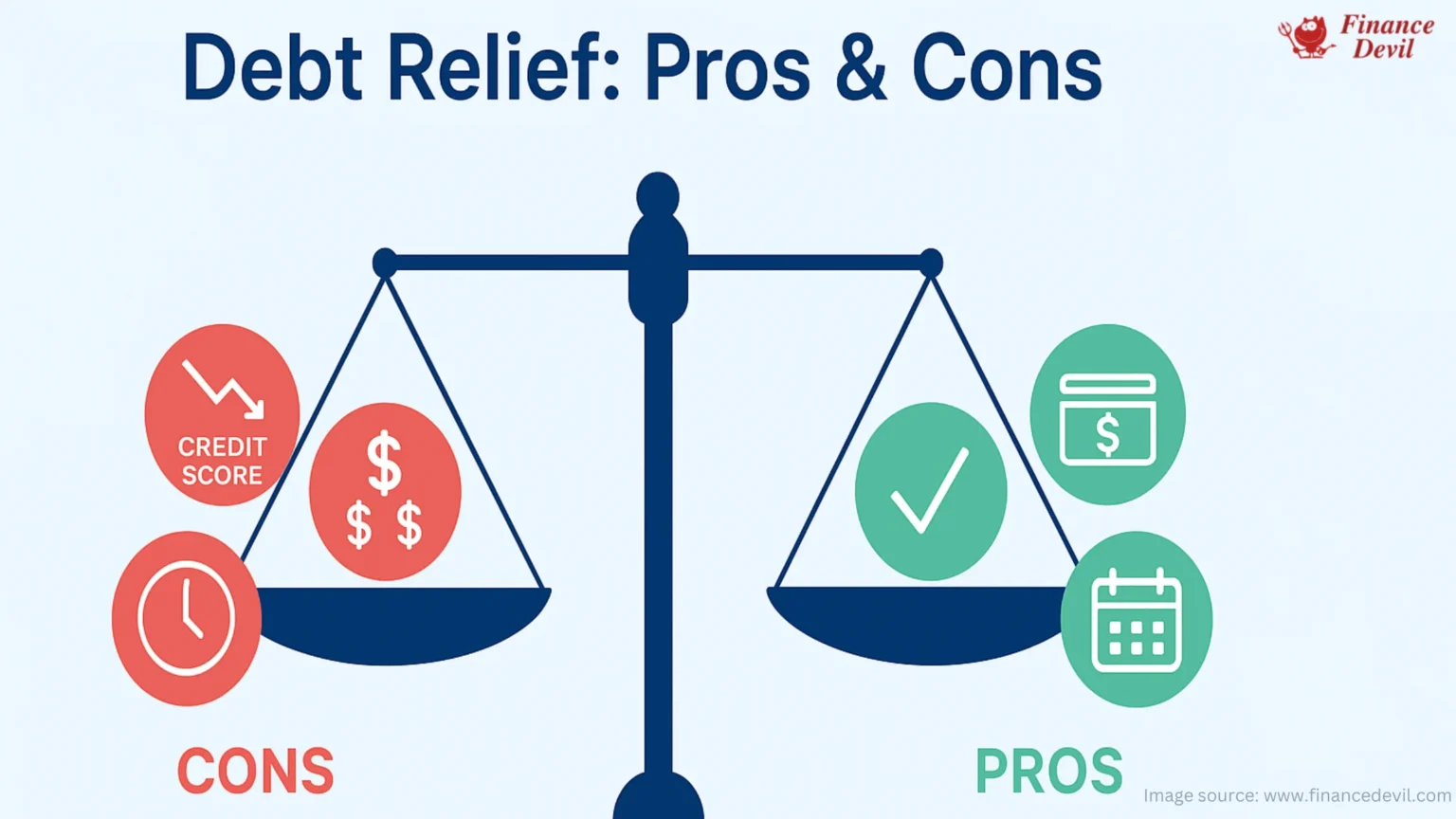
Immediate Stress Relief: No more harassment from multiple creditors once you’re enrolled in a program.
Potential Savings: Successful settlements can save you thousands. Creditors often agree to 50% reductions when they believe it’s their best chance of recovering any money.
Single Monthly Payment: Instead of juggling 5-10 different credit card bills, you make one payment to the debt relief company or counselor.
Professional Negotiation: Expert negotiators handle difficult conversations with creditors on your behalf.
Bankruptcy Alternative: For those facing financial collapse, debt relief can provide a path forward without the decade-long credit impact of bankruptcy.
The Drawbacks: What They Don’t Advertise
Severe Credit Damage: Debt settlement programs typically require you to stop making payments, causing your credit score to drop 60-100 points or more. These negative marks remain for 7 years.
No Guarantees: Creditors aren’t legally required to negotiate. They may continue charging late fees, increase interest rates, or even sue you.
Tax Consequences: Forgiven debt over $600 is considered taxable income by the IRS, potentially pushing you into a higher tax bracket.
Increased Debt Initially: While not making payments, interest and late fees continue accumulating, potentially leaving you worse off if negotiations fail.
Lengthy Process: Most debt relief programs take 2-4 years to complete, during which your credit remains damaged.
Comparing Your Options
| Program Type | Timeline | Credit Impact | Best For | Typical Cost |
| Debt Settlement | 2-4 years | Severe (100+ point drop) | Those unable to make minimum payments | 15-25% of debt |
| Debt Management Plan | 3-5 years | Moderate (initial drop, long-term improvement) | Those with steady income seeking lower rates | $0-50/month |
| Debt Consolidation Loan | 1-7 years | Minimal (may improve) | Those with good credit | 3-10% origination fee |
| Bankruptcy (Chapter 7) | 3-6 months | Severe (10 years on report) | Those with no other options | $1,300-3,000+ |
Top Debt Relief Providers
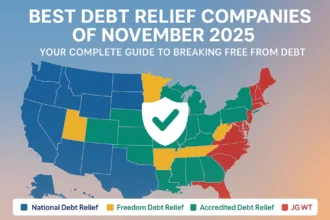
National Debt Relief: Best for larger debts ($10,000+), charges fees only after successful settlement, and has an A+ BBB rating.
Accredited Debt Relief: Strong customer service, minimum $10,000 debt, free consultation with no upfront fees.
GreenPath Financial Wellness: Nonprofit with low-cost debt management plans, financial education included, great for those seeking guidance.
InCharge Debt Solutions: Nonprofit credit counseling with affordable DMPs and excellent educational resources.
Frequently Asked Questions
How much can I realistically save with debt relief?
Most successful settlements result in paying 40-60% of the original debt, but after fees, your actual savings may be 20-40%. Results vary significantly based on creditor willingness to negotiate.
Will debt relief ruin my credit score?
Yes, temporarily. Debt settlement can drop your score by 100+ points and remains on your report for 7 years. However, if you’re already behind on payments, the damage may already be occurring.
Can creditors sue me during a debt relief program?
Yes. Debt relief programs don’t provide legal protection. Creditors can and sometimes do file lawsuits to collect debts, especially if you’ve stopped making payments.
Are there alternatives that won’t damage my credit?
If you have good credit, consider debt consolidation loans or balance transfer cards with 0% APR promotional periods. DIY debt payoff methods (debt snowball or avalanche) also preserve your credit.
How do I know if a debt relief company is legitimate?
Look for accreditation from the American Fair Credit Council (AFCC) or membership in the National Foundation for Credit Counseling (NFCC). Check BBB ratings and state licensing. Avoid companies that charge upfront fees before settling any debt; this is illegal.
What types of debt can be included in debt relief programs?
Most programs handle unsecured debt: credit cards, medical bills, personal loans, and collection accounts. They typically cannot include mortgages, auto loans, student loans, or tax debt.
Making Your Decision
Debt relief programs work best for those who:
- Owe $10,000+ in unsecured debt
- Cannot afford minimum payments
- Want to avoid bankruptcy
- Have exhausted other options
They’re not ideal if you:
- Have good credit and qualify for better alternatives
- Owe less than $7,500
- Can afford current minimum payments
- Need to maintain good credit for an upcoming major purchase
Take the Next Step
Get Your Free Debt Relief Consultation: Compare personalized quotes from top-rated debt relief companies and nonprofit credit counselors. See how much you could save and understand your options with no obligation.
Start Comparing Options Now – Most consultations take 15 minutes and can show you potential savings of $15,000 or more on $50,000 in debt. The sooner you act, the sooner you can start rebuilding your financial future.
In another related article, Debt Settlement vs. Debt Consolidation: Which Is Better for You?