
While your bank app quietly lets you blow past your grocery budget with one tap, a growing number of Gen Z savers are going old-school with cash, envelopes, and a surprisingly satisfying system that has racked up over 3 billion views on TikTok. The method is called cash stuffing, and here is the big question: does it actually work?
Inflation is still biting. Impulse spending is at an all-time high. And budgeting apps? They track what you already spent, not what you are about to spend. Enter the cash stuffing budget trend: a tactile, visual, and shockingly effective way to take back control of your money. Whether you are trying to build an emergency fund, pay off debt, or just stop wondering where your paycheck went, this method is worth knowing about.
What Is Cash Stuffing, Exactly?
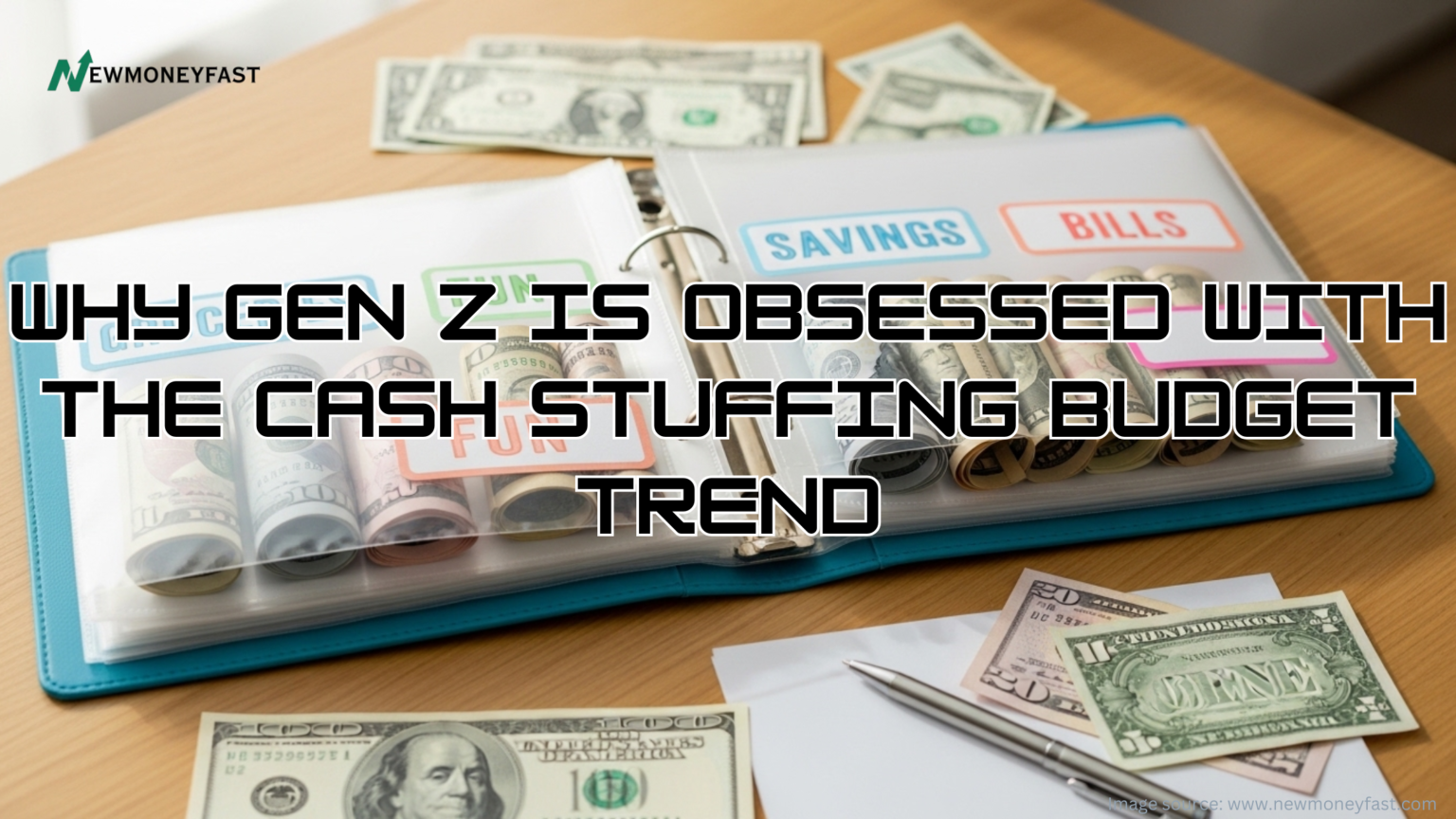
Cash stuffing is a modern spin on the classic envelope budgeting system that your grandparents probably swore by. The concept is simple: you withdraw your paycheck in cash, divide it into labeled envelopes or binder sleeves for different spending categories, and only spend what is physically in each envelope. When the grocery envelope hits zero, you stop buying groceries. When the fun envelope is empty, the fun stops. No overdrafts. No guessing. No app required.
Popular categories include: groceries, gas, dining out, entertainment, savings, bills, and even a dedicated sinking funds envelope for big future purchases like holidays or car repairs.
Why Is Gen Z So Obsessed With This Trend?
1. TikTok Made Budgeting Beautiful
Cash stuffing went viral because it looks great on camera. Colorful binders, crisp bills, satisfying ASMR sounds of money being sorted, and creators sharing their before-and-after savings journeys. TikTok content tagged #cashstuffing has amassed over 3 billion combined views (CNBC Select). That is not a niche trend; that is a movement.
Real example: TikToker and creator Jasmine Taylor of Baddies and Budgets used cash stuffing to pay off nearly $70,000 in debt. She later turned that journey into a business generating $2.2 million in 2024 (CNBC, 2025).
2. Digital Spending Feels Too Abstract

Tapping a card or clicking ‘buy now’ barely registers as spending real money. Research has consistently shown that people pay more for the same item when using a card versus cash, a psychological effect sometimes called the ‘cashless effect.’
When you hold cash, you feel the transaction. Boston University professor Jay Zagorsky, author of The Power of Cash, puts it plainly: the finite, tangible nature of bills creates a ‘forced budget constraint’ that makes you think twice before spending (Boston Globe, December 2025).
3. It Gives Gen Z Real-Time Budget Awareness
Budgeting apps often lag by a day or two. Your bank balance might not reflect that pending charge. Cash stuffing? Your balance is whatever is in the envelope, right now, in your hand. Bank of America data shows that 55% of Gen Zers do not have enough emergency savings to cover three months of expenses. Cash stuffing gives this generation a visceral, real-time way to fix that.
4. The Community Accountability Factor
Over 33% of Gen Z identify as ‘planners’ who actively budget and track spending. Social media turns cash stuffing into a shared lifestyle choice. Seeing peers hit savings goals, pay off debt, or save for a house makes financial discipline feel achievable and worth showing off.
Case in point: Catherine Asmen-Ardon, 30, used cash stuffing to save for a condo down payment. ‘You can see a number in your bank account, but when you see that much cash in front of you, you realize how much you saved a little at a time,’ she told the Boston Globe.
Does Cash Stuffing Actually Work? Here Is the Honest Answer
| PROS: What Works Great | CONS: Real Limitations |
| ✓ Stops impulse spending in its tracks | ✗ Cash can be lost, stolen, or destroyed |
| ✓ Zero overdraft or credit card debt risk | ✗ Misses out on credit card rewards and cashback |
| ✓ Makes budgeting visual and satisfying | ✗ Not practical for online bills or subscriptions |
| ✓ No apps, learning curves, or monthly fees | ✗ Frequent ATM trips can be inconvenient |
| ✓ Builds lasting spending awareness habits | ✗ Savings earn zero interest sitting in envelopes |
Bottom line from experts: cash stuffing works best for people who struggle with impulse purchases or digital overspending. If you mostly spend online or want to earn rewards, consider the hybrid version below.
How to Start Cash Stuffing in 5 Steps (This Weekend)
- Review 2 months of bank and credit card statements. List every spending category: groceries, gas, dining, entertainment, utilities, personal care, and savings.
- Set your monthly income and total it up. Use the 50/30/20 rule as a starting point: 50% for needs, 30% for wants, and 20% for savings and debt payoff.
- Withdraw your discretionary cash in one go. Many users do this on payday, bi-weekly or monthly. Ask for specific bill denominations to keep envelopes tidy.
- Label your envelopes or binder pockets. Popular labels: Groceries, Gas, Dining Out, Fun Money, Personal Care, Clothing, Sinking Fund, and Emergency Buffer.
- When an envelope is empty, stop spending in that category. Any money left over at month end? Roll it into savings or your debt payoff envelope.
| Quick Wins SummaryTotal potential savings: $200-$500/month (by eliminating impulse spending)Setup time: 30 minutes on your first paydayDifficulty level: Beginner-friendlyBest for: Anyone struggling with impulse spending, people new to budgeting, visual learners, and debt payoff journeysWhat you need: Envelopes or a cash binder (available on Amazon for $10-$25), your latest pay stub, and one hour of focused planning |
The Digital Hybrid: Cash Stuffing Without the Envelopes
If you mostly shop online or prefer not to carry cash, you can apply the exact same principles digitally. Here is how:
- Open separate checking or savings accounts for each budget category (many online banks like Ally or SoFi let you create multiple savings buckets for free).
- Use a dedicated debit card for discretionary spending only. When it hits zero, you stop.
- Try budgeting apps like YNAB (You Need a Budget), which mimics cash stuffing digitally. YNAB reports that the average new user saves $600 in their first two months and $6,000 in their first year.
Expert tip: Financial advisor Nick Charalambous of Alpha Wealth recommends keeping savings in a high-yield savings account (HYSA) rather than in physical envelopes, so your money earns interest while you save. The discipline stays; the risk disappears.
| Take the 30-Day Cash Stuffing ChallengeHere is your 4-week game plan to test the system:Week 1: Set up 5 envelopes and track every cash transaction.Week 2: Identify which envelope you overspend from. Adjust amounts.Week 3: Try the no-spend weekend. Use only your fun money envelope.Week 4: Count your leftover cash. Move it to savings or debt payoff. That number is your win.Tag a friend who needs to try this with you! |
Visual Suggestions for This Article
- Before/after spending comparison chart (without cash stuffing vs. with cash stuffing over 30 days)
- Step-by-step infographic: ‘How to Set Up Your Cash Stuffing Binder in 5 Steps’
- Sample monthly budget breakdown by envelope category with dollar amounts
- Screenshot of a sample YNAB digital envelope setup for the hybrid method
Frequently Asked Questions
Is cash stuffing actually legit or just a TikTok gimmick?
It is the real deal. The envelope budgeting system is over 70 years old, endorsed by personal finance experts including Dave Ramsey, and now backed by a growing body of behavioral finance research showing that physical cash reduces overspending compared to card payments. The TikTok aesthetic is new; the results are not.
How much money do I need to start?
You start with whatever your next paycheck is. There is no minimum. Even budgeting $50 in a ‘groceries’ envelope and $20 in a ‘fun money’ envelope will create real spending awareness immediately. The system scales to any income level.
What about bills I pay online or by direct debit?
Cash stuffing works best for your discretionary, day-to-day spending. Fixed bills like rent, utilities, and subscriptions stay on autopay. Many users create a separate ‘Bills’ envelope where they track these amounts without holding physical cash for them. The hybrid digital approach handles these categories seamlessly.
How quickly will I see results?
Most people notice the psychological shift in the first week, simply from handling physical money. Actual savings accumulate from month one. Jasmine Taylor of Baddies and Budgets cleared nearly $70,000 in debt using the method, and many users report cutting discretionary overspending by 20-40% within the first 30 days.
Is it safe to keep cash at home?
This is the biggest real concern. Do not keep large amounts of cash in envelopes indefinitely. Use the method for short spending cycles (weekly or biweekly), and transfer any surplus or savings into an insured bank account or high-yield savings account where it earns interest and is FDIC protected.
| Ready to Try Cash Stuffing?Start with a simple $10 binder kit and your next paycheck. Thousands of people have used this exact system to pay off thousands in debt and build their first real savings account. The envelopes do not lie: when the money is gone, you stop spending. That alone is a game changer.Compare the top budgeting apps and tools that work alongside cash stuffing at newmoneyfast.com |
Sources and Citations
This article references the following sources:
CNBC Select: Cash stuffing explained: Is TikTok’s viral budgeting method right for you?
CNBC: TikTok star with $2.2 million-a-year cash-stuffing business (2025)
Boston Globe: To stick to financial budgets, some choose cash (December 2025)
LiveNOW from FOX: Cash stuffing explained: Why envelope budgeting is making a comeback
SavingAdvice.com: Cash Stuffing: Why This Old-School Method Is Trending Again in 2025
Bank of America: Better Money Habits: Gen Z Financial Data
RTÉ News: Cash stuffing: The old-school budget trend returns (August 2025)
MMBB: Cash Stuffing: The Budgeting Trend That Everyone Is Talking About