

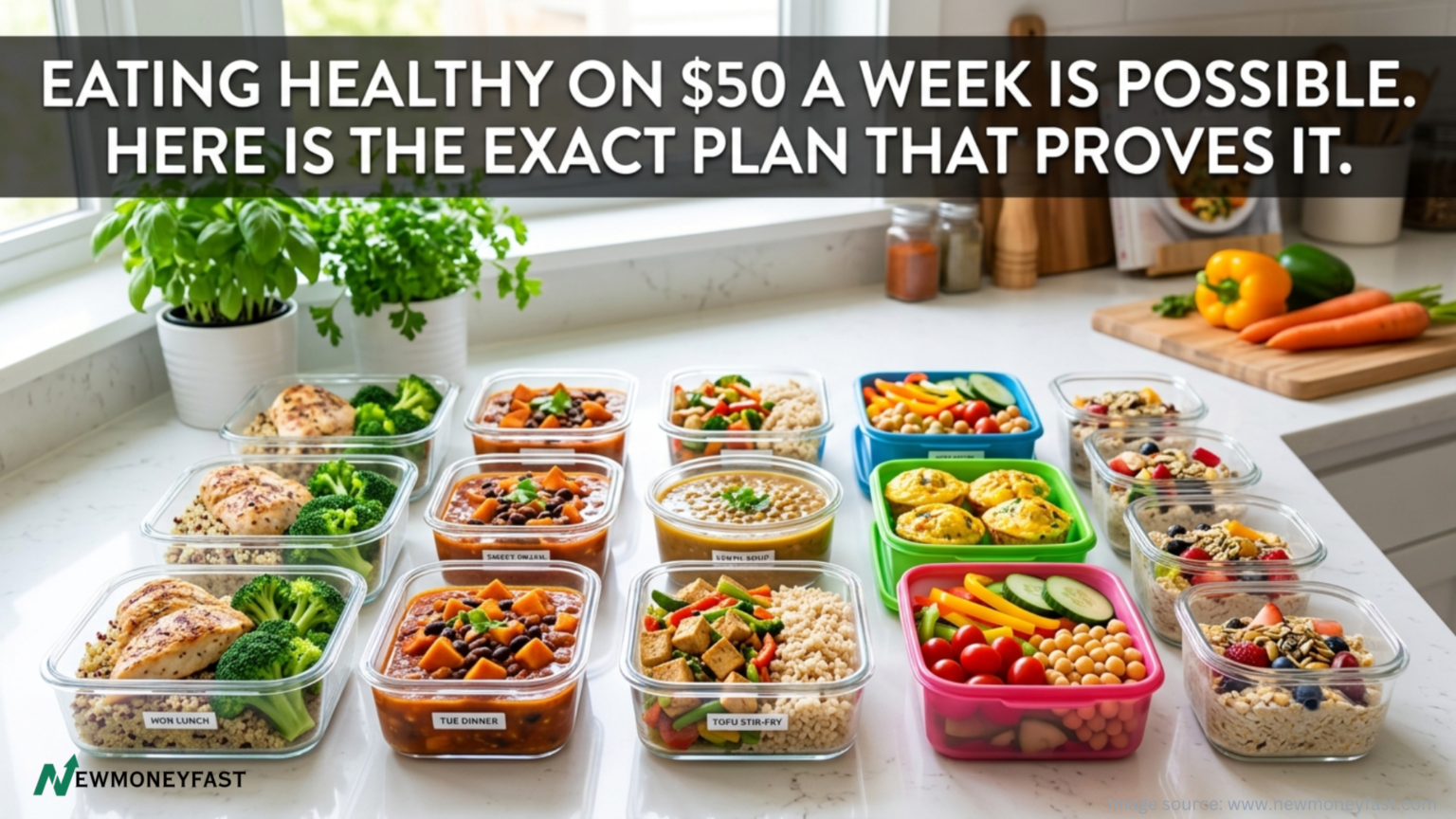
Most people believe that eating healthy costs a fortune. But the reality? The USDA 2024 Thrifty Food Plan shows a single adult can eat a nutritious diet for as little as $49 to $56 per week. That means eating clean is not a privilege. It is a strategy.
If your grocery bill keeps climbing while your energy and health take a hit, this plan is your reset. We are talking real food, real savings, and zero starvation. Here is exactly how to do it.
Quick Wins Summary
| Total Potential Savings | $200 to $400 per month vs. average American grocery spend |
| Weekly Budget | $50 per person (single adult) |
| Time to Set Up | 30 minutes for planning, 1 hour for weekly prep |
| Difficulty Level | Beginner-friendly |
| Best For | Singles, students, couples, budget-conscious families |
Why Most People Overspend on Groceries
The average American household spends $975 per month on food, according to the Bureau of Labor Statistics. That is nearly $12,000 a year. A massive chunk of that goes to convenience items, name brands, and impulse buys, not nutrition.
Here is what is actually draining your food budget:
- Buying pre-cut or pre-washed produce (you pay 30 to 50% more)
- Name-brand loyalty when store brands are identical ingredients
- No meal plan, so random items rot in the fridge
- Frequent small trips that trigger impulse buys each time
The fix is not eating less. It is eating smarter with a system.
The $50 Grocery List: Your Exact Shopping Blueprint
This list feeds one adult for a full week with balanced, nutritious meals. Prices are based on major chain averages (Walmart, Aldi, Kroger) and may vary slightly by region.
| Item | Approx. Cost | Why It Earns Its Spot |
| Oats (42 oz) | $3.50 | 7 breakfasts for under $0.50 each |
| Eggs (12-pack) | $3.00 | Protein powerhouse, 12 servings |
| Dried lentils (1 lb) | $1.80 | High protein, high fiber, incredibly filling |
| Dried black beans (2 lbs) | $2.50 | Versatile base for 5 different meals |
| Brown rice (5 lbs) | $4.00 | Stretches every meal for pennies |
| Canned tuna (4 cans) | $4.00 | Fast, lean protein at $1 per can |
| Canned tomatoes (3 cans) | $3.00 | Sauces, soups, stews, endless uses |
| Frozen broccoli (2 bags) | $4.00 | Cheaper than fresh, same nutrition |
| Frozen peas (1 bag) | $1.50 | Adds veg to any meal in 3 minutes |
| Sweet potatoes (3 lbs) | $3.00 | Filling, high in vitamin A and fiber |
| Bananas (bunch) | $1.50 | Cheapest fruit per serving at $0.15 |
| Apples (3 lbs bag) | $3.50 | Portable snacks for the whole week |
| Greek yogurt (32 oz) | $4.50 | Protein-rich breakfast and snack |
| Whole grain bread | $2.50 | Sandwiches, toast, and sides |
| Peanut butter (16 oz) | $2.80 | Protein and healthy fats, 16 servings |
| Chicken thighs (3 lbs) | $6.00 | Cheapest protein per pound, very versatile |
| Pasta (2 boxes) | $2.00 | Base for quick dinners under $2 |
| Olive oil (small) | $3.40 | Healthy fat for all your cooking |
| Garlic, onions, spices | $2.00 | Flavors every meal without breaking budget |
| TOTAL | ~$58.50 (under $50 at Aldi) | Aldi and Walmart bring this under $50 |
Pro tip: Shop at Aldi or Walmart and this entire list comes in under $50. Costco memberships pay off if you can split bulk buys with a roommate or family member.
The 7-Day Healthy Meal Plan Under $50
Here is exactly how to turn that grocery list into a full week of satisfying, balanced meals. Each day stays under $8 and uses ingredients from the list above.



| Day | Breakfast | Lunch | Dinner | Est. Daily Cost |
| Mon | Oatmeal + banana | Lentil soup + bread | Rice + black beans + salsa | $6.20 |
| Tue | Eggs + toast | Leftover lentil soup | Stir-fry veggies + rice | $5.80 |
| Wed | Greek yogurt + fruit | Tuna + crackers + apple | Pasta + tomato sauce + veggies | $6.40 |
| Thu | Oatmeal + peanut butter | Bean + cheese quesadilla | Baked chicken thighs + broccoli | $7.10 |
| Fri | Scrambled eggs + veggies | Leftover pasta | Fried rice + egg + frozen peas | $5.50 |
| Sat | Pancakes (homemade) | Veggie wrap + hummus | Chicken + sweet potato + greens | $8.00 |
| Sun | Smoothie + toast | Lentil + veggie stew | Pasta bake with leftover veggies | $5.00 |
| “At $50 a week, you are spending $7.14 per day on food. That is less than the cost of a single fast food combo meal. And you will feel 10x better eating this way.” |
5 Rules That Make This Budget Stick
1. Plan Before You Shop
Never enter a grocery store without a list. Studies from the Journal of Marketing Research show unplanned purchases account for 50 to 60% of total grocery spend. A five-minute meal plan on Sunday saves you $20 to $40 per week.
Action: Use the free Mealime app to auto-generate a grocery list from your weekly meal plan in under 3 minutes.
2. Buy Frozen Vegetables Without Guilt
Frozen vegetables are picked and flash-frozen at peak ripeness. Research from the University of Georgia found frozen produce has equal or higher nutrient levels than fresh. And they cost 30 to 50% less. Frozen broccoli, peas, spinach, and mixed veggies are your best friends.
3. Lean Into Protein-Rich Legumes
Dried lentils and black beans cost roughly $1.80 to $2.50 per pound and contain 15 to 18 grams of protein per cooked cup. Compare that to chicken at $2 to $3 per serving. Legumes are the most affordable protein source on Earth, and they keep you full for hours.
4. Batch Cook Once, Eat All Week
Spend 60 to 90 minutes on Sunday cooking a big pot of rice, a batch of lentils, and some roasted chicken thighs. These three components become the base of nearly every meal in the plan above. Batch cooking eliminates the ‘I have nothing to eat’ moment that sends people to DoorDash.
Action: Set a Sunday batch cook timer using Google Keep or a simple phone reminder. Consistency is everything.
5. Use Cashback Apps on Every Grocery Run
Even a $50 grocery run can earn you back $3 to $8 with the right apps. Stack these three:
- Ibotta — rebates on specific products including store brands (average user earns $10 to $20 per month)
- Fetch Rewards — scan any receipt for points redeemable for gift cards
- Rakuten — use for online grocery orders from Walmart or Instacart for additional cashback
Combined, these apps can earn you $15 to $30 per month back on groceries you were already buying.
The $50 Healthy Eating Challenge
Here is how to gamify your grocery budget this week:
- Screenshot the grocery list above
- Pick your store (Aldi wins on price)
- Download Ibotta before you go
- Stick to the list, scan your receipt, and track your total
- Share your receipt total in a personal finance group or text a friend to try it with you
Challenge goal: Get your weekly grocery total below $50 and earn at least $5 back in cashback. Can you beat the plan?
Pro move: Combine tips 3 and 5 (legumes plus cashback apps) and you can eat healthy for as little as $38 to $42 per week once you factor in rebates.
Visual Production Suggestions
- Infographic: “$50 Weekly Grocery Haul” showing all 19 items stacked visually with prices tagged
- Before/After savings comparison: “Average American grocery spend ($975/month) vs. this plan ($200/month)”
- 7-day meal plan calendar grid (shareable image for Pinterest/Instagram)
- Short-form video: Walk through the Sunday batch cook in under 60 seconds
Frequently Asked Questions
Is $50 a week realistic or just theoretical?
It is absolutely realistic, especially at Aldi, Walmart, or Lidl. The USDA Thrifty Food Plan confirms this budget is achievable with smart planning. At Aldi, many items on this list cost 20 to 40% less than standard supermarket prices, bringing the total well under $50.
Can I actually eat healthy on this budget or will I be bored?
Yes. The key is variety within staples. Rice, lentils, and beans are endlessly versatile. You can make tacos, stir-fry, curries, salads, soups, and more from the same core ingredients. Rotating your spices and sauces keeps things fresh without blowing the budget.
What if I have dietary restrictions like gluten-free or dairy-free?
Great news: most of this plan is already naturally gluten-free and dairy-free. Swap Greek yogurt for a dairy-free alternative ($1 to $2 more), and replace bread with corn tortillas or rice cakes (same price or less). The core structure still works.
How do I reduce food waste with this plan?
Batch cooking is your biggest waste prevention tool. When you cook rice and beans in bulk, nothing goes unused. Buy only what is on the list, freeze anything you will not use within two days, and rotate leftovers into the next day’s lunch automatically.
What about meals for a family of four?
Multiply the list by roughly 3.5x for a family of four (not 4x, since bulk buying reduces per-unit costs). A family of four can follow this plan for around $175 to $200 per month, less than half the national average of $975. Compare rates with the USDA Food Plans for your exact household size.
Start Saving on Groceries This Week
| The average family overspends on groceries by $300 to $500 per month. This plan pays you back in real food and real savings. |
Ready to stop overpaying? Here is your action plan for this week:
- Print or screenshot the grocery list above
- Download Ibotta and Fetch Rewards before your next trip
- Compare cashback browser extensions by reading our full guide: Honey vs. Capital One Shopping vs. RetailMeNot
- For more easy wins, check out: 10 Things You Are Paying Too Much for Right Now
Join the thousands of readers at NewMoneyFast.com who are cutting costs, earning cashback, and eating better, all at the same time.