

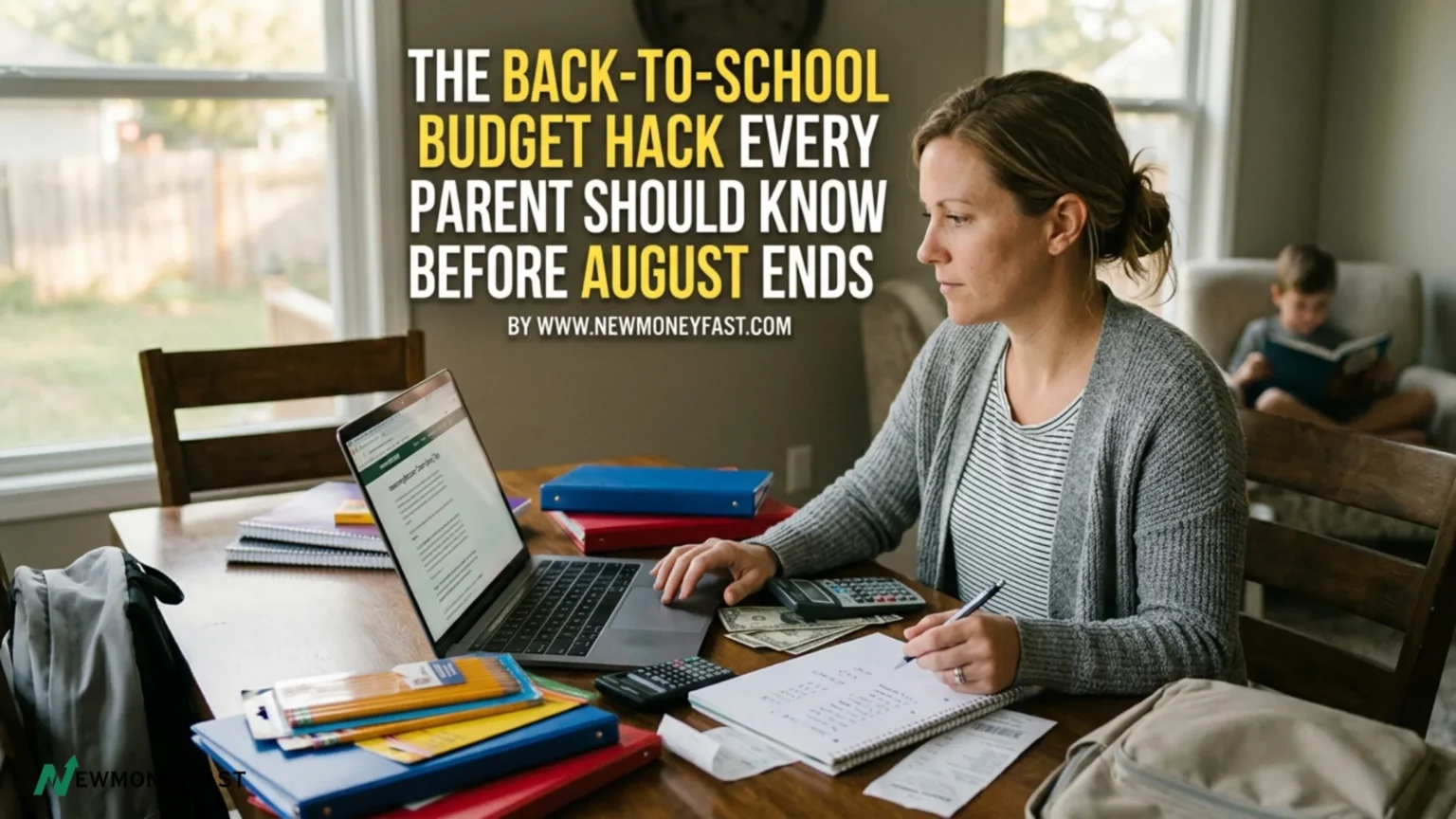
Parents are on track to spend $611 this back-to-school season, and the ones spending noticeably less are not clipping more coupons. They are stacking three or four small strategies at once, and that stack is the real hack.
Back-to-school prices keep climbing, and 2026 is no exception. School supply costs have jumped sharply over the past year, and most shoppers expect prices to be even higher this season. But new research on how parents are actually shopping this year reveals a pattern worth copying before your own list gets checked off at full price.
| QUICK WINS SUMMARYTotal Potential Savings: $150 to $250 per childTime Investment: 30 minutes to set upDifficulty Level: Beginner-friendlyBest For: Parents of K-12 kids, families shopping on a tight timeline |
Why ‘Stacking’ Is the 2026 Back-to-School Trend
New surveys show back-to-school budgets are all over the map this year, from around $252 to $611 per child depending on the study, but the shoppers who report the least stress share one habit: they are not relying on a single trick. Nearly a third of value-seeking parents are now combining three or more cost-saving tactics in the same shopping trip. That is the shift. Here is how to build your own stack in five moves.
1. Audit What You Already Own Before You Buy Anything.
Before a single tab opens on your phone, walk through backpacks, drawers, and the junk bin from last June.
About 28% of parents plan to reuse existing supplies instead of replacing them this year, and that single step often eliminates a third of the shopping list before it starts.
Estimated Value: $30 to $60 saved before you spend a dollar.
Action Step: Do a 10-minute supply audit tonight and cross off anything you already have from the school list.
2. Trade Down on Brand, Not on Quality.
Store-brand folders hold papers exactly like the name-brand version, and generic backpacks from the same factories often carry the same zippers and stitching.



About 21% of parents plan to buy less expensive or more basic versions of items on their list this year rather than cut items out entirely.
Estimated Value: $20 to $50 per child, depending on how much of the list you trade down.
Action Step: Pick three items on the list where your kid will never notice the brand, and buy the store version first.
3. Buy Secondhand for the Big-Ticket Items.
Electronics, dress clothes, and outerwear are where back-to-school budgets get blown, and they are also where secondhand shopping saves the most.
Roughly 14% of parents now plan to buy secondhand where they can, a habit that has grown every year for the past four years and skews toward younger parents who are most comfortable shopping resale apps and local marketplaces.
Estimated Value: $40 to $100 on a single big-ticket item like a laptop, tablet, or winter coat.
Action Step: Before buying anything over $50 new, search a resale marketplace for a lightly used version first.
4. Stack Cashback on Top of Every Purchase.
Cashback and rewards apps do not compete with sales and coupons. They layer on top of them, which is exactly why the stacking strategy works.
Running a purchase through a cashback app in addition to a store sale or coupon is one of the fastest ways to add extra savings without spending any extra time comparison shopping.
Estimated Value: $10 to $40 back per shopping trip, depending on the retailer and cart size.
Action Step: Install one cashback app tonight and activate it before your next back-to-school order.
| App | Avg. Cashback Rate | Best For | Payout Method |
| Rakuten | 1% to 10% at 3,500+ stores | Big-box back-to-school hauls | PayPal or check |
| Ibotta | $0.25 to $5 per item, plus bonuses | Grocery and supply-list basics | Bank transfer or gift cards |
| Fetch | Points on any receipt, any store | Reusing receipts you already have | Gift cards |
5. Time Purchases Around Sales Events, Not the School Calendar.
More than half of shoppers who used cost-saving tactics this year got an early start by shopping June sales events instead of waiting for back-to-school displays to go up.
Waiting for a designated sale window, including your state’s tax-free weekend if it has one, instead of shopping the week before school starts can meaningfully change your total.
Estimated Value: 10% to 20% off a full-list purchase, just from timing.
Action Step: Check your state’s tax-free weekend dates and your top retailer’s sale calendar before you buy anything else on the list.
| THE 7-DAY BACK-TO-SCHOOL SAVINGS SPRINTDay 1 to 2: Audit supplies you already own.Day 3: Install and activate a cashback app.Day 4 to 5: Trade down brand on at least 3 list items.Day 6: Check secondhand marketplaces for one big-ticket item.Day 7: Make your final purchases during an active sale window and track your total savings.Try the sprint and see how close you get to the $150 to $250 savings target. |
Which move are you starting with tonight? Parents who combine four or more of these tactics are already outspending the crowd in savings, not in dollars out the door.
Visual Content Suggestions for Design Team
1. Before/after chart showing average spend at $611 versus a stacked-strategy target of $360 to $460.
2. Side-by-side app comparison graphic for Rakuten, Ibotta, and Fetch.
3. A printable 7-Day Savings Sprint checklist styled in NMF brand colors.
4. A simple bar chart of the four most common cost-saving tactics parents are using in 2026.
FAQ
Is stacking these strategies actually worth the extra effort?
Yes. Each individual tactic saves a modest amount, but combined they can meaningfully cut a $500-plus back-to-school budget without cutting anything your kid actually needs.
How much time does this take to set up?
About 30 minutes total: a supply audit, one cashback app install, and a quick look at sale dates. Most of the savings come from decisions, not extra shopping trips.
Do I need multiple cashback apps to make this work?
No. One app used consistently beats three apps used occasionally. Pick the one that covers where you already shop most.
What if my state does not have a tax-free weekend?
Retailer sale events, including major June and July promotions, work the same way. The goal is simply to avoid buying the full list at full price the week school starts.
How quickly will I see results?
Most parents can measure their total savings the same week, once purchases are made through a cashback app and compared against last year’s full-price total.
Ready to Start Saving?
Join thousands of parents stacking these exact strategies this month. Compare the top cashback apps here and activate one before your next back-to-school order. [Affiliate link placeholder: Cashback App Comparison]
Related New Money Fast Reads
1. Overspending on Streaming? The Ruthless 10-Minute Audit That Cuts Your Bill in Half
2. You Are Paying Bank Fees Every Month and Do Not Even Know It. Here Is How to Stop
3. 7 Legit Ways to Get Free Gift Cards Every Month (No Surveys, No Scams)
Sources
1. NerdWallet, 2026 Back-to-School Shopping Report.
2. JLL, 2026 Back-to-School Shopping Report.
3. Forbes, Back-to-School Spending Is Up and So Are Parents’ Expectations.
4. KPMG Consumer Pulse via ClickOrlando, Dollars and Sense: The Emergence of the Strategic Shopper.
5. Deloitte Insights, 2026 Back-to-School Survey.
6. Capital One Shopping Research, Back-to-School Shopping Statistics 2026.
7. YPulse, Back to School Shopping Report 2026.
8. PwC, US Consumer Poll on Back-to-School Spending 2026.