

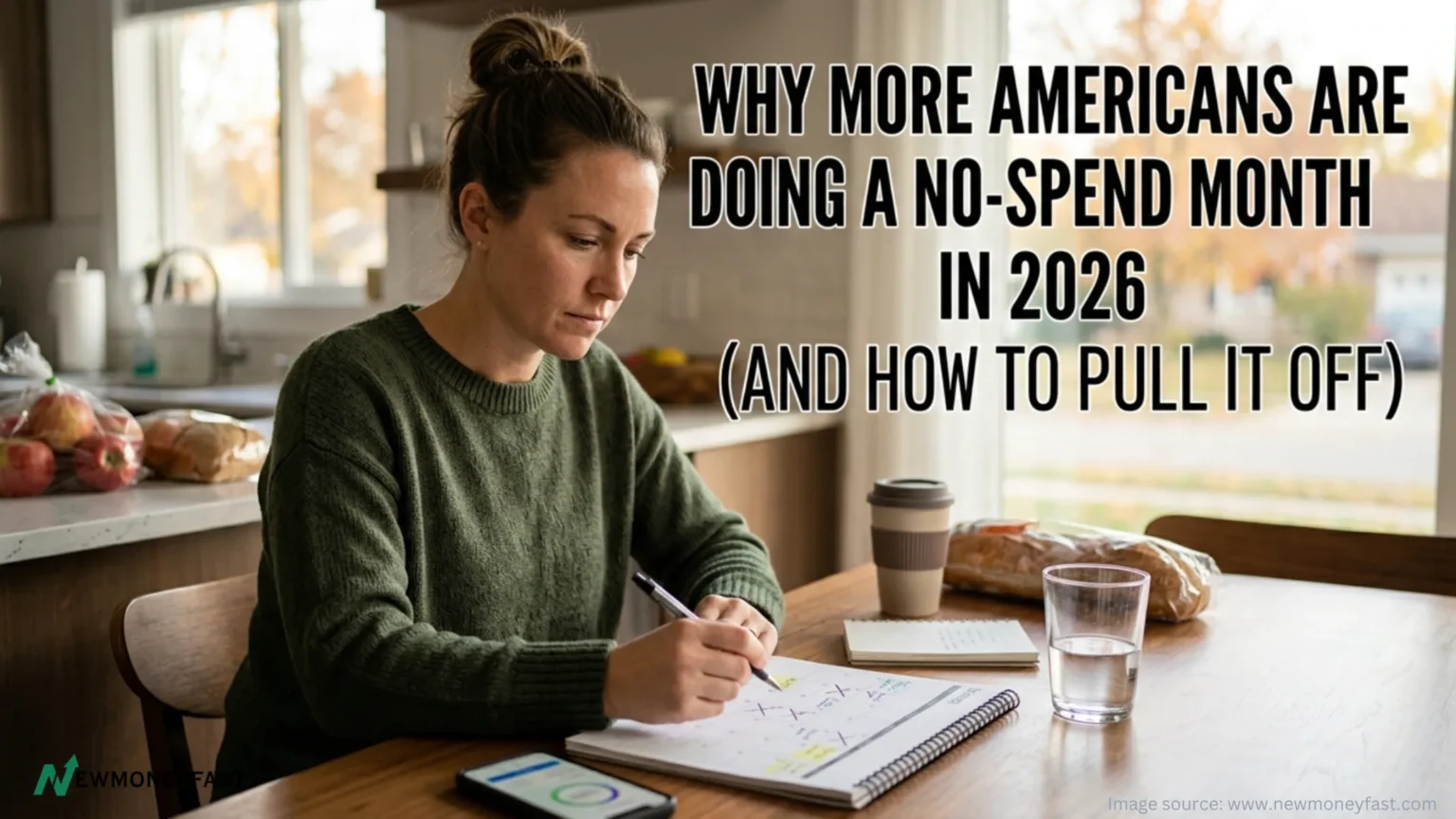
One in four Americans has already tried it. A third of those who did it last January failed. And millions more are planning to try again.
The no-spend month is not a new idea, but in 2026 it has reached a tipping point. Inflation fatigue, subscription overload, algorithm-driven impulse shopping, and a broad cultural shift toward intentional living have turned a quirky personal finance challenge into a mainstream movement with its own Reddit communities, TikTok hashtags, and dedicated accountability groups.
This is not about deprivation. It is about a 30-day financial reset that forces you to see your spending clearly, break the habits that drain your account quietly, and walk out the other side with more money, more awareness, and a completely different relationship with your wallet.
| WHY THE NO-SPEND MONTH IS BIGGER THAN EVER IN 20261 in 4 Americans: have tried a no-spend challenge at least once, according to NerdWallet52% of Gen Z: are actively looking for ways to opt out of the economy by spending less overall (Stagewell survey)Google searches: for no-spend challenges hit an all-time high in 2025, up 40% year over year (Wall Street Journal)53% of US adults: set a budget for 2026, up from 46% in 2025, the highest budgeting rate in recent YouGov trackingThe failure rate: 1 in 3 people who tried No Spend January 2026 failed, which is why a plan matters more than willpower |
What Exactly Is a No-Spend Month?
A no-spend month is a 30-day personal finance challenge where you commit to spending money only on essentials and cutting out every non-essential purchase for the entire month.
Essentials: rent or mortgage, utilities, groceries (home cooking only), transportation to work, medication, insurance, and minimum debt payments.
Non-essentials: everything else. Takeout and restaurant meals, clothing, subscription services, entertainment, home goods, apps, beauty products, gadgets, gifts, and anything bought out of convenience rather than necessity.
The goal is not to spend zero dollars. The goal is to eliminate discretionary spending for 30 days, surface your spending triggers, and rebuild your habits from a clearer baseline.
Why It Works: The Psychology Behind the Reset
Spending is not purely rational. It is deeply habitual. The morning coffee, the Amazon scroll when bored, the takeout order when tired, the app purchase when entertained: these are not decisions. They are patterns running on autopilot.


A no-spend month interrupts those patterns hard enough and long enough for your brain to register an alternative. Research on habit formation suggests it takes approximately 21 to 66 days to break an established habit, depending on the behavior and the individual. A 30-day challenge sits squarely in that window.
There is also a psychological benefit that compounds the financial one. As one consumer finance expert put it: when you hit your goal, you feel proud of your achievement. And when you allow yourself to loosen up your spending afterward, doing things like going out for a restaurant meal can feel special again. That revaluation is the whole point.
| THE 5 BENEFITS BEYOND JUST SAVING MONEY1. Spending awareness: You see exactly where money was quietly leaking every month.2. Habit interruption: You break automatic spending patterns before they cost you another year.3. Gratitude reset: You rediscover what you already have. Contentment replaces novelty-seeking.4. Financial clarity: Your true essential expenses become visible, often lower than you assumed.5. Community accountability: Joining the movement online creates peer accountability that dramatically increases success rates. |
The Math: How Much Can You Actually Save?
The savings potential of a no-spend month depends on your current discretionary spending. Here is what a typical household might save, based on common non-essential spending categories:
| Category | Average Monthly Spend | No-Spend Month Saving |
|---|---|---|
| Dining out and takeout | $280/month | $280 saved |
| Coffee shops | $60/month | $60 saved |
| Clothing and accessories | $120/month | $120 saved |
| Entertainment (movies, bars) | $80/month | $80 saved |
| Online impulse shopping | $150/month | $150 saved |
| Unused or forgotten subs | $40/month | $40 saved |
| Beauty and personal care | $70/month | $70 saved |
| Estimated Total | $800/month | $800 saved in 30 days |
For households that lean toward higher discretionary spending, $1,000 to $1,500 in one month is not unusual. Even conservative spenders who are not big takeout users typically save $300 to $500 in the first month. The real long-term value is what happens after: many participants permanently cut 30 to 40% of their non-essential spending even after the challenge ends, because the habits formed during the month stick.
How to Pull It Off: The Week-by-Week Plan
The number one reason people fail is starting without a plan. One in three participants in January 2026 did not make it through the month. Here is a structure that dramatically improves your odds.
Before You Start: The 3-Day Prep Window
Do these three things before Day 1 or you will be setting yourself up to fail.
- List your essentials and non-essentials. Write down every recurring and likely expense. Label each one essential or non-essential. Be honest. A gym membership you use three times a week might be essential. A streaming service you rarely watch is not.
- Set a specific goal for the month. What are you saving this money for? Emergency fund, credit card payoff, vacation, down payment? Write the number down. A concrete target doubles your follow-through rate versus a vague intention to save more.
- Tell someone. Accountability is the strongest predictor of success. Tell a friend, partner, family member, or online community. Better yet, challenge someone to join you. People who do no-spend challenges with an accountability partner complete them at significantly higher rates.
Week 1: The Withdrawal Week (Days 1 to 7)
The first week is the hardest because the habits are still fresh. You will feel the pull of your usual patterns most acutely in week one. Do not negotiate with cravings in week one. Each urge you resist weakens the pattern by a measurable degree.
Practical tactics for Week 1:
- Delete shopping apps from your phone. Remove the friction point entirely. Out of sight genuinely is out of mind for most people.
- Unsubscribe from promotional emails. Retail emails are designed by conversion specialists to make you spend. Remove the stimulus.
- Pre-plan all meals for the week. Meal planning eliminates the tired-at-6pm takeout trigger. Spend 20 minutes Sunday mapping out 7 dinners.
- Replace the coffee shop ritual. Brew at home and take it in a travel mug. Make it feel like a ritual, not a deprivation.
Week 2: The Awareness Week (Days 8 to 14)
By week two, the cravings start to fade and awareness kicks in. This is when most participants have their first real insight: the realization of how much they were spending on autopilot and how little of it was actually making them happier.
Week 2 action items:
- Track every dollar you do not spend. Keep a running tally of purchases you almost made but did not. Seeing that number grow is powerful motivation.
- Find free alternatives for everything you usually pay for: library books instead of Amazon purchases, free outdoor activities instead of paid entertainment, cooking from pantry staples instead of grocery runs.
- Review your subscription list. Use our subscription audit guide to identify and pause subscriptions during the challenge. Do not cancel yet, just pause. Decide at the end of the month which ones to keep.
Week 3: The Groove Week (Days 15 to 21)
Most people who make it past day 14 finish the month. Week three is where the challenge stops feeling like restriction and starts feeling like a new normal. The behavioral scientists call this the habituation phase.
Week 3 tactics:
- Audit Week 1 and 2 savings. Add up what you did not spend. Transfer that amount to your savings goal account right now. Seeing real money move makes the progress tangible.
- Handle the urge to splurge differently. When a purchase craving hits, write it down in a Want List. Research shows that writing down a desired item and waiting 30 days causes most people to no longer want it. The Want List beats both impulse buying and deprivation anxiety.
- Rediscover what you already have. Most households have unread books, unwatched streaming content they already pay for, clothes they forgot about, pantry food that could become great meals. The no-spend month is an inventory exercise as much as a savings challenge.
Week 4: The Harvest Week (Days 22 to 30)
The final week is about locking in the gains and preparing for what comes after. The challenge officially ends at day 30, but the habits you built are worth more than the one-month savings total.
- Calculate your total savings. Add up every non-essential purchase you did not make this month. This is your number. Write it down. Share it.
- Decide which non-essentials to permanently cut. Not everything needs to come back. Most participants find 30 to 40% of their non-essential spending they genuinely do not miss. Cancel those subscriptions now. Keep the rest.
- Set a new spending rule for Month 2. The best outcome from a no-spend month is a refined set of spending values going forward. Some people commit to one no-spend week per month. Others adopt a permanent no-buy rule on specific categories. Any reduction you sustain is a win.
What to Do When You Slip (And You Might)
One in three participants failed No Spend January 2026. Here is the truth about slipping: a single off-day does not erase 29 days of progress. It only does if you use it as an excuse to quit.
When you slip:
- Acknowledge it without drama. Write down what triggered it. Was it stress? Boredom? A sale alert? Social pressure? The trigger is the data. The data is useful.
- Get back on track the same day. Do not wait until Monday or the first of the month. The next hour is your restart.
- Adjust your rules if needed. If you budgeted for everything except the annual car registration that hit this month, that is not a fail, that is a planning gap. Adjust the essentials list and continue.
A low-buy month is a completely valid alternative if total abstinence is consistently failing you. Instead of zero non-essential spending, commit to a set dollar limit. Many personal finance experts consider a low-buy approach more sustainable long-term, particularly for people prone to rebound overspending after extreme restriction.
The Move That Multiplies Your No-Spend Month Savings
The money you save during a no-spend month only matters if it goes somewhere meaningful instead of evaporating back into regular spending the following month.
On Day 1 of your no-spend month, open a dedicated account for the savings you are about to generate. A high-yield savings account paying 4% to 5% APY keeps the money separate and earns interest while you build the habit. At the end of the month, sweep the total saved directly into that account before regular spending resumes.
If you have high-interest credit card debt, redirect the savings there instead. Applying $800 to a 22% APR credit card balance is effectively an instant 22% return on your money. Nothing in a savings account beats that. For more on the fastest debt payoff strategy, see our debt avalanche guide.
| THE NEW MONEY FAST NO-SPEND MONTH BLUEPRINT3 Days Before: List essentials vs. non-essentials. Set your savings goal. Tell one person.Week 1 (Days 1-7): Delete shopping apps. Unsubscribe from promotional emails. Meal plan for the week. Replace every paid habit with a free alternative.Week 2 (Days 8-14): Track dollars not spent. Find free entertainment. Review and pause subscriptions.Week 3 (Days 15-21): Transfer your savings to your goal account. Start a Want List for cravings. Rediscover what you already have.Week 4 (Days 22-30): Calculate total saved. Decide which non-essentials stay cut permanently. Set Month 2 rules.Day 30: Share your number. Celebrate the win. Keep the habits that worked. |
Stack Your No-Spend Savings With These Guides
While you are doing the reset, use these New Money Fast guides to make the money you save work even harder:
- Your Subscriptions Are Draining $200 a Month Without You Knowing
- Credit Card Debt Eating You Alive? Here Is the Avalanche Method That Wipes It Out Faster
- The Beginner’s Guide to Passive Income: 6 Legit Streams Anyone Can Start in 2026
- 8 High-Yield Savings Accounts Paying Over 4.5% Right Now (Ranked)
| VISUAL CONTENT SUGGESTIONS FOR DESIGN TEAM1. No-Spend Month Calendar: A printable 30-day calendar grid with week labels and space to mark no-spend days vs. essential-spend days, shareable as a social media challenge graphic in brand colors2. Savings Counter Graphic: An animated or static savings tracker showing Day 1 through Day 30 with the estimated savings accumulating week by week, designed to share as a progress update on social media3. Trigger Awareness Infographic: A visual showing the 5 most common spending triggers (boredom, stress, FOMO, sale alerts, habit) with a corresponding free alternative for each one4. Want List Template: A branded printable Want List where readers can record items they are craving but resisting during the challenge, with a 30-day review date built in |
Frequently Asked Questions
Does a no-spend month actually work, or is it just a social media trend?
The data says both. It has genuine traction as a cultural movement, and it has real financial results for the people who finish it. NerdWallet found that over a quarter of Americans have tried a no-spend challenge, which is not the footprint of a fad. The 33% failure rate for No Spend January 2026 reflects a common pattern: people start without a plan and quit when the first craving hits. With a week-by-week structure and an accountability partner, success rates improve dramatically.
What counts as an essential expense during a no-spend month?
Essentials are: rent or mortgage payments, utilities, groceries bought for home cooking, transportation needed for work, health insurance and medication, minimum debt payments, and childcare. Everything else is non-essential. Common gray areas: a gym membership you use daily (essentials for some, non-essential for others), a professional certification you are mid-way through, or a subscription that is also your primary source of news. Set your own rules before Day 1 and stick to them.
What if I have an unexpected expense during the month?
Life happens. A car repair, a medical co-pay, a necessary home repair: these are not fails. The no-spend month is about discretionary spending, not about refusing to live. Add the unexpected expense to your essential list for the month and keep going. Do not let one unavoidable cost become the reason you abandon the whole challenge.
Is a no-spend month sustainable long-term?
As a recurring practice, yes. Many participants do quarterly no-spend weeks or an annual no-spend month as a financial maintenance ritual. As a permanent lifestyle, probably not for most people, nor should it be. The goal is to use the month to identify which non-essential spending genuinely adds value to your life and which does not. The permanent outcome is not zero discretionary spending, it is more intentional discretionary spending with a cleaner baseline.
What should I do with the money I save?
Transfer it immediately to a high-interest savings account or toward your highest-rate debt as soon as the month ends. Do not let it sit in your checking account where it will vanish back into regular spending. For people with credit card debt above 20% APR, every dollar toward that balance saves you roughly 22 cents per year in interest, every single year until the balance is gone. For people who are debt-free, directing the savings into a high-yield savings account or toward a specific goal (emergency fund, vacation, down payment) locks in the wins before normal spending resumes.
| 30 DAYS. ONE RESET. A COMPLETELY DIFFERENT RELATIONSHIP WITH YOUR MONEY.You do not need to do a no-spend month forever. You just need to do it once to understand what your money has been doing while you were not paying attention.Pick a start date. Set a goal. Tell someone. Delete one shopping app. The reset starts with a single decision.More money challenges and fast wins at newmoneyfast.com. |
Sources
- InvestigateTV / NerdWallet: 1 in 4 Americans Tried a No-Spend Challenge; 1 in 3 Failed in January 2026
- NerdWallet: More Than a Quarter of Americans Have Tried No Spend January
- Elite Daily / Stagewell Survey: 52% of Gen Z Actively Looking to Opt Out of Economy by Spending Less
- Yahoo Finance: How the No Buy 2026 Trend Could Help You Get Your Budget on Track
- YouGov: US Consumer Spending and Budgeting Trends 2026 — 53% Set a Budget, Up From 46% in 2025
- AOL / Ramsey Show: Americans Rebelling Against Inflation With No-Buy Challenges in 2025 — Searches Up 40% YoY
- The Independent / Inkl: No Buy 2026 — Dopamine Reset and Gratitude Benefits
- UpfrontTrading: The No-Spend Movement in 2026 — Psychology-Aware System for 30/60/90-Day Challenges
- The Penny Hoarder: How to Save Money in 2026 With a No-Spend Challenge
- Wealthvieu: Average Savings Rate by Income 2026 — US Personal Savings Rate 4.6%